How to understand spoken French fast: one real clip, four steps
Part of Path 2 · Past the plateau, guide 1 of 2.
How to understand spoken French fast: find the joins the page hides. Four steps on one real RFI clip, then the same loop on any video you watch.

Spark team
Guides to learning a language from real content
11 min read
Key takeaways
To understand spoken French fast, mark the joins a transcript hides, like the n of on before a vowel, then say the line and listen again.
- French sounds like one long word because words join in speech, not only because of speed
- The page marks elision with an apostrophe but leaves liaison unmarked
- In one RFI transcript block we counted 11 apostrophes, while 5 places where on meets a vowel had no mark
- Listen cold and write, mark every join on the transcript, say the line as it runs, then listen again without the text
- Say the line out loud the way it joins before you test your ear on it again
You can read French. You press play on an interview with the transcript open, every word one you know, and your ear still gets one long sound. You rewind, and it is still one sound.
How to understand spoken French fast starts with why that happens: it is not only speed. French joins words the page shows as separate, and the page shows some of those joins and hides others. So mark them on a transcript first, and you will know what to listen for.
Why does French sound so fast, like one long word?
French sounds like one long word because, in speech, words join at their edges. A word can lose its last vowel before the next word, and a silent last consonant can come back and attach itself to the next word's vowel, so the place where one word ends moves. To get better at fast spoken French, learn where the words join, because slowing the audio down keeps every join, just slower.
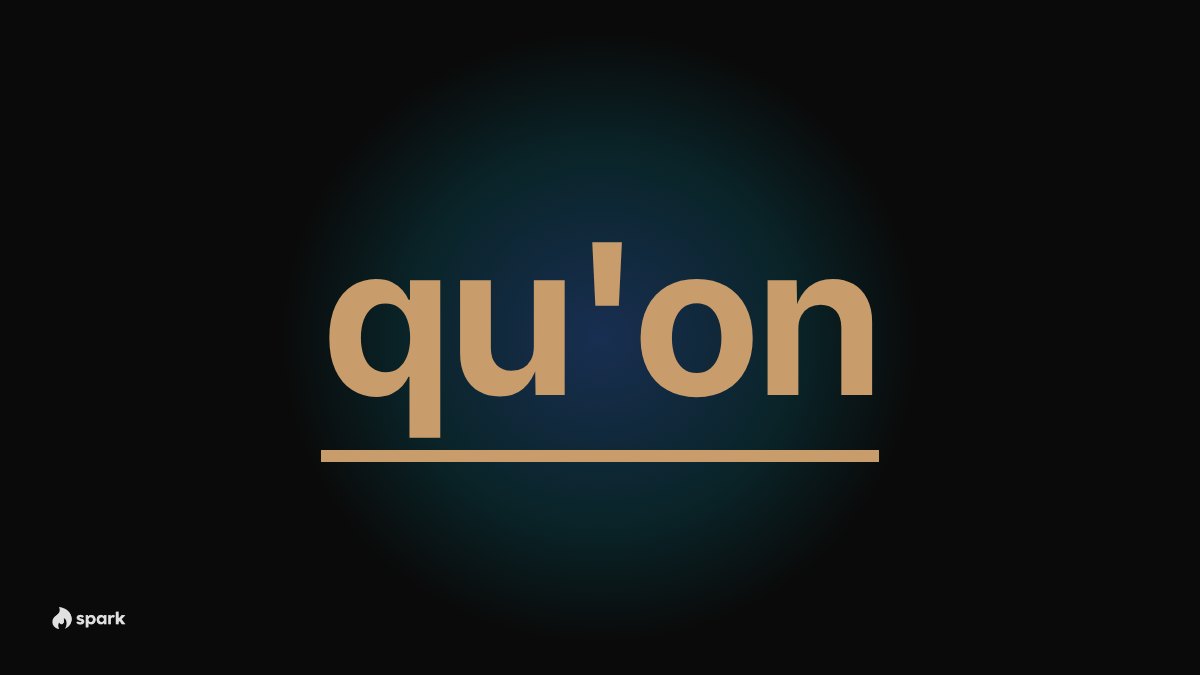
The first kind of join is elision. The Office québécois de la langue française (OQLF) defines it as dropping the last vowel of a short grammar word before a word that starts with a vowel or a mute h. The apostrophe shows you it happened:
que + on → qu'onthat + we → the e of que is gone, and the apostrophe marks the spot
The second kind is liaison. The OQLF's page on required liaisons describes it as saying a word's final, usually silent consonant with the first vowel of the next word, so the two form one syllable. Nothing on the page shows you that one.
Both are part of connected speech, the name for how words run into each other when people talk. If your reading is far ahead of your ear in general, learning French as an adult covers that gap; this article is about the joins themselves.
You can't find the joins in a definition. You need one real line, with its transcript, to see where they are. Immerse: tap any word for its meaning in that sentence, so the words are settled before you go after the sound.
The clip: 1:43 of Catherine Ringer on RFI
The clip is a 1:43 extract on RFI's Français Facile site, dated 18 September 2026, with a transcript you can download. It comes from the Journal en français facile, a news program made for learners, and the page marks its level as A2.
We picked it for its published transcript, not for its speed. We make no claim about how fast anyone in it talks, and the loop is the same on the fastest clip you have.
The 1:43 is the whole extract, not only Ringer. A presenter introduces the singer's story, then plays part of a 2019 interview in her own voice, recorded "au micro RFI de José Marinho", as the transcript PDF puts it. A song extract and the presenter's sign-off close it.
Ringer is talking about the record collection she and her partner Fred Chichin put together. This is the line the whole article runs on:
ce qu'on avait en communwhat we had in common
One thing to know before you start: we marked the transcript, not the audio. Every mark below is what the rule says happens at that join. You check each one with your own ear in Step 4.
So don't read the transcript yet. Listen first.
Step 1: Listen cold and write down what you hear
Play the clip from where Ringer's voice takes over from the presenter, up to « ce qu'on avait en commun », with the transcript closed. Write it down the way your ear gives it to you, gaps and all.
Write sounds, not only words. If you hear something like a word you don't know, spell it the way it sounded. A wrong guess on paper is more use than a blank, because it shows where your ear put a word edge.
What goes wrong: you write nothing, or only the words you already know. That is fine, and it is the point of this step. Some of the gaps on your page may be joins, and Step 2 shows you which ones.
- You wrote most of itGood. Step 2 will show you which words, if any, you got from the meaning, not the sound.
- You wrote a few wordsFine on a first pass. Keep the gaps; they are your map for Step 2.
- You wrote nothingPlay the same stretch twice more, then write whatever sounds you can. Even three syllables count.
Now open the transcript and see why.
Step 2: Read the transcript and mark every join
Put the thread line under what you wrote, and mark two kinds of join on it: the one the page shows with an apostrophe, and the one it does not show at all. Check your gaps against the second kind first: it is the one the page gives you no warning of.
Mark the elision you can see. In qu'on, the e of que is gone before on, and the apostrophe tells you.
Then mark the liaison you can't see. By the rule, the n of on in on avait is sounded and joined to avait. The Académie française writes this pattern on(n)aime, a pronoun joined to its verb, and calls the liaison obligatory between a pronoun and the verb that goes with it.
ce qu'on‿avait en communwhat we had in common (the apostrophe is on the page; the ‿ is our mark for the liaison it leaves out)
We counted both kinds in the whole block of Ringer's words. We took the quoted block in RFI's transcript PDF, from « On va dire que » to « On se sentait libres. », and counted 138 words, split by the spaces between them, leaving out the quotation marks and the [...] gap.
- 11 apostrophesEach one is an elision the page shows you: n'avait, n'avais, c'était, n'avais, qu'on, c'est, qu'on, c'est-à-dire, n'est, qu'on, d'endroits.
- 5 times on meets a vowelon a réuni, on avait en double, qu'on avait en commun, qu'on appelle, qu'on écoutait. Each is a pronoun and its verb, and none has a mark.
- More with no markThose 5 are not all of it. En anglais is another: the OQLF makes liaison required after most one-syllable prepositions.
You can recount from the PDF yourself.
The page shows you the elisions. It hides the liaisons.
Mark the other four on joins too. Three of them are lines worth carrying into the next steps:
quand on a réuni notre discothèquewhen we put our record collection together
c'est ce qu'on appelle la musique contemporaineit's what we call contemporary music
parce qu'on écoutait de la musique de tas d'endroitsbecause we listened to music from all kinds of places
The rules for when liaison is required, optional or forbidden are a topic of their own. Is French hard to learn sets them out, so we won't repeat them here. For listening, we suggest marking the pronoun-and-verb case first, because it came back 5 times in Ringer's block.
The marks are only a map, though, until you say the line.
Step 3: Say the line the way it runs together
Say the thread line out loud, grouped by sound instead of by word: sound the n of on and carry it straight onto avait, so avait starts with an n. Say it five times, then along with the recording.
Say it before you listen again. A line you have only seen split into words, your mouth may split too. Once you have said on‿avait as one piece, you know what shape to listen for when it comes back.
This is the step that turns a line you understand on paper into one you can say.
What goes wrong: you say the words one by one. That puts the gaps back, and you are practicing the page again. If it keeps happening, say only qu'on‿avait until it comes out in one breath, then add ce in front and en commun after.
Saying it along with the recording has a name. It is shadowing, and our guide to the shadowing technique explains how to do it, so here it is just one round at the end of the step.
Train: each word you looked up comes back as a card the next day, in the sentence you met it in, with the word blanked out. Then you say the line after a model voice and hear the two side by side.
Now test the ear, not the page.
Step 4: Listen again without the text
Close the transcript and play the same stretch again, from where Ringer's voice takes over up to « ce qu'on avait en commun ». This time, check each mark you made by ear.
Ask one question per mark. Did you hear the n in on avait, and did qu'on reach you as one sound? This is the step where you check what we could only read on the page.
Write down what you heard, not what you expected. The marks are what the rules predict. A real speaker in a real interview may not follow the page, and your ear is the judge here.
- You still can't split itCut the stretch to the 10 seconds around the thread line, and mark only the on joins. Then run Steps 3 and 4 again.
- You heard something the rule did not predictTrust your ear and write it down. People do not all speak the same way, and noticing that is what you are training.
- It clearsMove to a new clip. One cleared line is the method working, not the job done.
One clip cleared is a method, not a fix. So where does the next clip come from?
When the next clip still sounds like a blur
The next clip gets the same four steps, and some problems with it have a plain answer. Here are three you may hit, with our suggestion for each, not a rule from a study.
- There is no transcriptFind a clip that has one before you start; the loop cannot run without it. RFI's Français Facile is one place to look: the Ringer page has both the audio and the transcript.
- You want to use subtitlesOn YouTube or Netflix, turn on French subtitles that follow the speech word for word, and use them as the transcript in Step 2. Turn them off for Step 4. English subtitles hand you the meaning, so you stop listening for the sound.
- One line will not clearMark it, say it, and leave it for tomorrow. Coming back to it cold is a better test than a tenth replay tonight.
The same loop works in Spanish, with different joins. Our guide to understanding native Spanish speakers when they talk fast runs it on Spanish speech.
Then use the line. Use: talk or write about the clip, and get corrected as you go; Spark replies in text. If you can tell someone what Ringer and her partner had in common, en commun has become yours to say.
Try this tonight: take 20 seconds of any French clip that has a transcript. Listen once and write what you hear, then open the transcript, mark every place two words joined, say the line the way it runs, and listen again without the text.
Then ask yourself one thing. Which join fooled you first: one the page showed you with an apostrophe, or one it hid?
- 1Immerse
- 2Train
- 3Use
How Spark helps
Spark gives you the reading side of this loop on French you choose. Paste the link to an article or a video, like the RFI page, and read it in the Reader, where you tap any word for its meaning in that sentence. In review, each word comes back as a card: the sentence you met it in, with the word blanked out. Get it right and it waits longer; miss it and it is back tomorrow. Shadowing plays a line, you say it back, and you hear the two side by side. The model voice is Spark's, not the speaker's in your clip, so the ear test in Step 4 stays with the original recording.
Questions people ask
Why is it so hard to understand French?
French is hard to understand because the French you hear is not split the way the French you read is. In speech, a short word can lose its vowel (elision) and a silent final consonant can be sounded before a vowel (liaison). Word edges move, so words you know on the page reach you joined to their neighbors.
What is the difference between elision and liaison in French?
Elision drops a vowel, and the page shows it: que on is written qu'on. Liaison sounds a consonant that is normally silent, and the page does not show it: the n of on is sounded in on avait. Elision shortens a word; liaison joins two. The rules for liaison are in our guide to whether French is hard to learn.
How do I improve my listening comprehension skills?
Work one short clip that has a transcript. Listen and write what you hear, check it against the transcript, mark every place two words joined, say the line the way it runs, then listen again without the text. Do it on a new clip each day: the marks show you what to listen for.